
Associate Professor in Philosophy, The University of Sydney
IP - este blog é a continuação do meu blog IP do sapo. Quem quiser aceder a esse blog tem um link na barra lateral.
September 04, 2020


Música de ser criança
Música de ser criança
Quando a criança era criança,
foi de braços pendurados?
queria o riacho ser um rio,
o rio uma eletricidade,
E essa poça o mar.
Quando a criança era criança,
não sabia que era criança,
tudo estava animado pra ele,
E todas as almas eram uma.
Quando a criança era criança,
não tinha opinião de nada,
Não tinha hábito,
Muitas vezes sentava no banco de alfaiate,
Correndo na praia,
Tinha uma vértebra no cabelo
e não tirou cara tirando fotos.
Quando a criança era criança,
foi o tempo das seguintes perguntas:
Por que eu sou eu e por que não você?
Por que estou aqui e por que não lá?
Quando começou o tempo e onde termina a sala?
A vida sob o sol não é apenas um sonho?
É o que eu vejo e ouço e cheiro
não só a aparência de um mundo do mundo?
Existe mesmo o mal e gente?
Que são mesmo os maus da fita?
Como é que eu sou quem sou?
Antes de eu me tornar, não era,
E que uma vez eu que sou,
não será mais quem eu sou?
Quando a criança era criança,
estrangulou no espinafre, nas ervilhas, no arroz lácteo,
E na couve-flor fertilizada.
E agora come tudo isso
E não só para necessidade.
Quando a criança era criança,
uma vez acordei em uma cama estranha
E agora sempre,
Muita gente parecia linda pra ele
E agora só na sorte,
imaginou claramente um paraíso
E agora no máximo posso adivinhar,
Não consegui pensar em nada
E hoje olhando antes disso.
Quando a criança era criança,
jogou com entusiasmo
E agora, na causa como antes, só mais,
quando essa coisa é o trabalho dele.
Quando a criança era criança,
bastava pra ele como comida maçã, pão,
E ainda é assim.
Quando a criança era criança,
as bagas caíram na mão dele como apenas bagas
E agora ainda,
As nozes frescas fizeram uma língua áspera pra ele
E agora ainda,
tinha em todas as montanhas
A saudade da montanha cada vez mais alta,
E em cada cidade
a saudade da cidade ainda maior,
E ainda é assim,
pegou as cerejas no topo de uma árvore
Em um alto sentimento
assim como ainda hoje,
um medo de qualquer estranho
E ainda tem ela,
Esperando pela primeira neve,
e ainda esperando assim.
Quando a criança era criança,
jogou uma bengala de lança contra a árvore,
E ela ainda está tremendo aí hoje.
É isto: em vez de pensarem nos problemas reduzem tudo a vociferações de ódios de esquerda-direita
... ofensivas da direita ou da esquerda. A nossa sociedade política é de uma total mediocridade. Ninguém pensa, ninguém discute os problemas, falam por slogans. Isto já não tem volta atrás.
Desfazendo preconceitos
Quem pensa que as aulas de Moral nas escolas são muito diferentes da cidadania, se fosse às escolas tinha grandes surpresas. Digo isto, sendo, não apenas uma não-crente como uma grande crítica da influência nefasta das igrejas e da educação religiosa, o pior veneno contra os direitos das mulheres da toda a história e uns fanáticos do controlo sexual de toda a gente.
No entanto, devo também dizer que a disciplina de Moral na escola não tem nada a ver com o que era quando fui aluna. A professora de Moral da minha escola faz um trabalho muito válido. Não endoutrina os alunos. Faz um trabalho ligado a questões éticas e a problemas da adolescência.
Organiza conferências e palestras à volta de temas que interessam aos alunos. Todos os anos leva lá pessoas da área da saúde para falar de diversos assuntos: sexualidade, alcoolismo, questões ligadas ao sofrimento psicológico, como a depressão, o bullying, a bulimia, a anorexia. Também leva à escola polícias para falar da violência no namoro, do ciúme e do controlo no namoro e como isso leva à violência doméstica. É muito interessante porque os polícias contam casos típicos onde muitos alunos se revêem.
Organiza estas sessões para todos os alunos da escola que queira inscrever-se. Nós professores, se podemos, levamos a turma a participar. Trabalha com a colaboração de uma enfermeira que faz a ponte entre a escola e o hospital e os centros de saúde e arranja consultas para alunos que precisem e os pais não possam. Eu uso-me muito dela e da enfermeira para ajudar alunos que precisam urgentemente de ajuda.
Ela ouve os problemas dos miúdos, fala com eles. Tem um trabalho difícil porque não trabalha com turmas completas, dado que em cada turma há três ou quatro que escolhem a disciplina, de modo que trabalha com 45 turmas, por exemplo. Não é nada fácil, nomeadamente os miúdos do 7º e 8º anos. Há dois anos, a propósito da violência no namoro, um grupo de alunos dela fez uma instalação no átrio da escola, muito boa. Faz melhor trabalho nesses assuntos que alguns professores que se armam em grandes éticos mas não têm respeito nenhum pelos colegas e endoutrinam alunos sem vergonha nenhuma e com o aplauso de muitos [estou um bocado amarga..?. estou chateada].
Isto tudo para dizer que os comentadores de jornais, que sabem quase nada do que se passa nas escolas têm uma ideia muito errada do que lá se faz e dos méritos desta disciplina do evangelista. Outro dia, no DN, um indivíduo começava a crónica assim, 'eu sei tudo de dar aulas porque a minha mãe era professora'. Isto é o nível dos comentadores. O meu pai era engenheiro. Naturalmente percebo tudo de engenharia. Ahh, não, espera lá... engenharia é diferente de educação porque educação toda a gente é especialista...
Música barroca ou, como é que um país se torna excelente numa área qualquer
Competição saudável. Porque é que os belgas são tão bons a fazer chocolate e criações de chocolate? Porque cada pastelaria que se preze tem o seu mestre chocolateiro ou maitre bomboniere que faz criações de chocolate, bombons, bombinhas, trufas de chocolate, bolos e bolinhos, etc. Decora a montra com criações próprias. Com tanta competição entre pastelarias, vão-se tornando cada vez melhores.
Não há nenhum segredo especial. É apoiar e deixar que ideias diferentes e práticas diferentes entrem em competição. Não é com imposições autoritárias.
Como é que a Finlândia houve uma altura que se tornou excelente na educação? Foram buscar professores com boa formação, apoiaram-nos e deixaram-nos em paz a trabalhar sem autoritarismos. Agora estão a dar passos atrás. Cá já foi assim mas durou pouco tempo e há muitos anos que andamos a dar passos à caranguejo, a desfazer o que tinha sido bem feito.
Vem isto a propósito de, como é que na Alemanha se tornaram excelentes na produção musical na época barroca, o que depois continuou?
--------------------"O que era excepcional na Alemanha luterana era o grande número de compositores. Não só cada capela principesca tinha seus próprios músicos e compositores, como as igrejas, em cada cidade, mesmo nas de tamanho modesto, tinham um organista, cantores e muitas vezes instrumentistas, bem como um "cantor", necessário para garantir o fornecimento de composições musicais para os serviços de domingo.
Algumas delas estão a começar a ser redescobertas, enquanto outras ainda são raras e difíceis de conhecer. E, no entanto, todos contribuíram para criar um património impressionante que A RICERCAR não pára de explorar há 40 anos ". Jérôme Lejeune
► Discover a playlist of 40 tracks selected by us, to give you a sample of the variety of tracks contained in this box set: https://lnk.to/Masters_German_BaroqueFA


As florestas da Europa Central desaparecem às mãos de um máfia euro-austríaca bilionária
Como a máfia da madeira está a destruir a última floresta primitiva da Europa, a Amazónia da Europa: os Montes Cárpatos.
 Mapa extraído de Network of Carpathian, ilustra las grandes llanuras y su pertenencia estatal.
Part I: The Romanian Eldorado
Published on 3 September 2020
Johannes Kaiser, Christoph Lehermayr, Sebastian Reinhart - Addendum (Vienna)
Translated by Paula Kirby
260 million fallen trees


With the aid of satellite images, Global Forest Watch has calculated that 317,000 hectares of Romanian forest were lost to logging between 2001 and 2017. That’s the equivalent of 444,000 football pitches or twice the size of the Austrian federal state of Vorarlberg. Half of these trees were in national parks or conservation areas and were hundreds of years old. Experts from the Environmental Investigation Agency (EIA), a US NGO, investigate and expose the predatory exploitation of nature throughout the world.
“Whether it’s in America, Asia or Africa, people are appalled at the way our planet is being destroyed. But while the deforestation of the Amazon rainforest has been horrifying people for years, hardly anyone realises that Europe contains remnants of virgin forests that are just as important. The fact that the majority of these are on our doorstep, in the Carpathians, and are under threat remains an untold story,” says the EIA’s David Gehl. The EIA reports accuse Schweighofer of having been the “biggest receiver of illegal timber” and having “lied about the source of its products for more than ten years”.

September 03, 2020

Vivian Maier
Ela fotografa as ruas. A fotografia dela revela um olhar atento sobre as pessoas e as coisas: ela vê emoções, ângulos, formas, cores, absurdos e contradições.
Os 150 mil negativos, alguns ainda por revelar, só foram descobertos porque em 2007 falhou o pagamento de um armazém alugado, em Chicago, onde os tinha guardados e o dono vendeu os caixotes de material arquivado em leilão. Três coleccionadores de fotografias compraram-nos e começaram a publicar o material: fotografias, pequenos filmes caseiros, às centenas, entrevistas de áudio e slides.
Muitas fotografias dela são pioneiras e ela tem uma estética muito própria.
seriam americanos conservadores normais se não fosse o amarelo berrante que os trai

a vida dos outros ou luta de classes

chuva oblíqua?

multiculturalismo

infância feliz

luta de classes

esta é um Botero antecipado


olhares

pobreza mas dignidade

a verdadeira cumplicidade?

a maneira como as cores interiores deles mesmos se fundem nas cores da natureza como se não houve descontinuidade entre ambos.

um auto-retrato

Mais talento - Leonor Amaral
Uma soprano coloratura portuguesa. Canta com presença e graça esta ária muito conhecida de Don Pasquale, uma opera buffa.
Ora aqui está uma iniciativa que não percebo
A universidade de Nova York vai organizar residências segregadas no campus a pedido de um grupo de 1.105 estudantes negros -os Black Violets- , uma pequena percentagem dos estudantes negros da universidade, porque não estão para ter que educar os colegas acerca do que é o racismo e então querem ter um espaço onde não tenham que aturar outras raças.
Pelos vistos estas petições já aconteceram em outras universidades do país.
New York University moves to implement racial segregation in student dorms
Since late June, the Office of Residential Life and Housing Services at New York University (NYU) has been working closely with a small, student-led task force to make racially segregated housing a reality in undergraduate student dorms.
A little over two months ago, a recently organized advocacy group called Black Violets created an online petition demanding that the university “implement Black student housing on campus in the vein of themed engagement floors across first-year and upperclassmen residence halls.” In its petition, the group argues that “Too often in the classroom and in residential life, black students bear the brunt of educating their uninformed peers about racism.” African American students, the group states, desperately require a “safe space” where they can escape from students, staff and faculty of other races.
Entretanto:
The decision to hold in-person classes at NYU will prove to be disastrous. Over the last few weeks, several major US schools, including the University of North Carolina at Chapel Hill, Notre Dame, Princeton and the University of Southern California, have been forced to revert to online instruction after explosions of COVID-19 amongst their students, staff and faculty. Despite this, NYU has decided to go ahead with a full reopening, knowingly sacrificing the lives of students staff, and faculty to increase its profits.
It is imperative that all students realize the danger they are facing in returningto school. What is needed is not the division of students along identity-based lines, but their unification against the present, barbaric social order. The fight against all forms of exploitation and oppression is inherently linked to the fight against capitalism. Students at NYU and universities around the world who seek to fight for genuine social equality must turn to the international working class, the great, powerful, progressive force in society. It is only by uniting workers of all races, ethnicities, genders, sexual orientations and nationalities behind a clear socialist program and perspective that capitalist barbarism will be overcome.


Há muita gente nova a cantar com muito talento
Esta canção -Morgen- é uma das 4 que Strauss escreveu para dar à sua mulher como presente de casamento (by the way... melhor presente de casamento de sempre). É a última. Não é fácil cantá-la com o sentimento que ela exige, ao mesmo tempo de antecipação romântica e delicadeza. Gosto de ouvi-la cantar por mulheres sopranos, como a soprano do terceiro vídeo que a canta como quem desmaia na antecipação do deleite. Faz lembrar a interpretação da Elisabeth Schwarzkopf. Mas descobri esta jovem mezzo-soprano que também a canta muito bem. É claro que faz sentido ser cantada por um homem, dado que foi escrita, a música e as palavras por um homem e, quem ouve a interpretação contida, cheia de delicadeza e sentimento de Dietrich Fischer-Dieskau, com essa voz linda que ele tinha quando era novo e a técnica que lhe permite cantar dessa maneira absolutamente emocionante pode não querer nunca mais outra interpretação.
Uma [pequena] lista de leitura para quem quer entender Marx
Marx’s own writing
James Muldoon, University of Exeter
The long history of brutal, totalitarian “Marxist” regimes around the world has left many people with the impression that Marx was an authoritarian thinker. But readers who dive into his work for the first time are often surprised to discover an Enlightenment humanist and a philosopher of emancipation, one who envisaged well-rounded human beings living rich, varied and fulfilling lives in a post-capitalist society. Marx’s writings don’t just propose a revolutionary political project; they offer a moral critique of the alienation of individuals living in capitalist societies.
1. An Introduction to a Contribution to the Critique of Hegel’s Philosophy of Right (Available here)
Originally published in 1844 in a radical Parisian newspaper, this fascinating short essay captures many of Marx’s early criticisms of modern society and his radical vision of emancipation. It also introduces several of the key themes that would shape his later writings.
Marx claims that the bourgeois revolutions of the 18th century may have benefited a wealthy and educated class, but did not challenge private forms of domination in the factory, home and field. Marx theorises the revolutionary subject of the working class, and proposes its historic task: to abolish private property and achieve self-emancipation.
2. Economic and Philosophic Manuscripts of 1844 (Available here)
Not published within his lifetime, and only released in 1932 by officials in the Soviet Union, these notes written by Marx are an important source for his theory of capitalist alienation. They reveal the essential outline of what “Marxism” is, and provide the philosophical basis for humanist readings of Marx.
In these manuscripts, Marx analyses the harmful effects of the organisation of labour in modern industrial societies. Modern workers, he argues, have become estranged from the goods they produced, from their own labour activity, and from their fellow workers. Rather than achieving a sense of satisfaction and self-actualisation in their labour, workers are left exhausted and spiritually depleted. For Marx, the antidote to modern alienation is a humanist conception of communism based on free and cooperative production.
3. The Communist Manifesto (Available here)
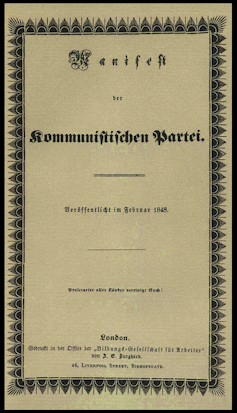

Opening with the famous line, “a spectre is haunting Europe – the spectre of communism”, the Communist Manifesto has become one of the most influential political documents ever written. Co-authored with Friedrich Engels, this pamphlet was commissioned by London’s Communist League and published on the cusp of the various revolutions that rocked Europe in 1848.
The manifesto presents Marx’s materialist conception of history and his theory of class struggle. It outlines the growing tensions between the bourgeoisie and the proletariat under capitalist relations of production, and predicts the triumph of the workers.
4. The German Ideology (Available here)
For anyone seeking to understand Marxism’s deeper philosophical and historical underpinnings, this is one of his most important texts. Written in around 1846, again with Engels, The German Ideology provides the full development of the two men’s methodology, historical materialism, which seeks to understand the history of humankind based on the development of its modes of production.
Marx and Engels argue that individuals’ social consciousness depends on the material conditions in which they live. He traces the development of different historical modes of production and argues that the present capitalist one will be replaced by communism. Some interpreters view this text as the point where Marx’s thought began to emerge in its mature form.
5. Capital (Volume 1) (Available here)
Published in 1867, Capital is Marx’s critical diagnosis of the capitalist mode of production. In it, he details the ultimate source of wealth under capitalism: the exploited labour of workers. Workers are free to sell their labour to any capitalist, but since they must sell their labour in order to survive, they are dominated by the class of capitalists as a whole. And through their labour, workers reproduce and reinforce both the economic conditions of their existence and also the social and ideological structure of their society.
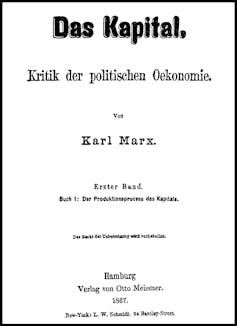

In Capital, Marx outlines a number of capitalism’s internal contradictions, such as a declining rate of profit and the tendency for the formation of capitalist monopolies. While certain aspects of the text have been questioned, Marx’s analysis informs economic debate to this day. For anyone trying to understand why capitalism keeps falling into crisis, it’s still hugely relevant.
On Marx and Marxism
Robert Jackson, Manchester Metropolitan University
1. A Companion to Marx’s Capital – David Harvey
From social movements to student reading groups, from Thomas Piketty’s Capital in the Twenty-First Century to articles in the Financial Times, Marx’s economic writings are at the centre of debate once again. And one of the figures most associated with these discussions is the geographer David Harvey.
Based on his popular online lecture series, Reading Capital with David Harvey, this book makes Marx’s Capital accessible to a broader audience. Guiding readers through Marx’s challenging (but rewarding) study of the “laws of motion” of capitalism, Harvey provides an open and critical reading. He draws out the connections between this world-changing text and today’s society – a society which, after all, is still shaped by the economic crisis of 2008.
2. Karl Marx: A Nineteenth-Century Life – Jonathan Sperber
For Jonathan Sperber, a historian of modern Germany, Marx is “more a figure from the past than a prophet of the present”. And, as its title suggests, this biography places Marx’s life in the context of the 19th century. It’s an accessible introduction to the history of his political thought, particularly as a critic of his contemporaries. Sperber discusses Marx in his many roles – a son, a student, a journalist and political activist – and introduces the multitude of characters connected with him. While Francis Wheen’s well-known Karl Marx: A Life is a more freewheeling account, Sperber’s writing is both highly readable and more deeply rooted in historical scholarship.
3. From #BlackLivesMatter to Black Liberation – Keeanga-Yamahtta Taylor
Writing about the US just over 150 years ago, Marx noted that: “Labour in a white skin cannot emancipate itself where it is branded in a black skin.” And the influence of his ideas about the relationship between race and class is visible in debates right up to the present day.
Penned by academic and activist Keeanga-Yamahtta Taylor, who came to popular prominence in the recent #BlackLivesMatter movement, this is a timely read for those interested in the various ways Marx’s thought is being rebooted for the 21st century. A penetrating book, it connects the origins of racism to the structures of economic inequality. With plenty of Marxist ideas (among others) in her toolbox, Taylor critically examines the notion of a “colour-blind” society and the US’s post-Obama order to great effect.
4. Why Marx was Right – Terry Eagleton
A call to reconsider the widely accepted notion that Marx is a “dead dog” from renowned literary theorist Terry Eagleton. In this provocative and highly readable book, Eagleton questions the plausibility of ten of the most common objections to Marx’s thought – among them, that Marx’s ideas are outdated in post-industrial societies, that Marxism always leads to tyranny in practice, that Marx’s theory is deterministic and undermines human freedom. Always witty and passionate, Eagleton peppers his spirited defence (with some reservations) of Marx’s ideas with his own literary and cultural insights.
5. Jacobin magazine – edited by Bhaskar Sunkara (available online)
In the era of the Occupy movement, “taking a knee” and #MeToo, the discussion of Marx’s ideas has gained an increasing presence on the internet. One of the most notable examples is the socialist magazine and online platform Jacobin, edited by Bhaskar Sunkara, which currently reaches around 1m viewers a month.
Covering topics from international politics and environmental movements to the recent education strikes in Oklahoma and West Virginia and Bernie Sanders’s presidential campaign, it’s a lively source for anyone who wants to see an analysis of contemporary politics that’s influenced by Marx’s thought.
Subscribe to:
Comments (Atom)