IP - este blog é a continuação do meu blog IP do sapo. Quem quiser aceder a esse blog tem um link na barra lateral.
February 15, 2020
'We need a new romanticism' II
Tem piada ter ido dar hoje com aquele artigo acerca da necessidade de uma contra-cultura deste novo cientismo ressurgente. É que ontem de manhã, numa aula, estive a falar disso com uma aluna.
Tenho esta aluna do 12º ano de quem gosto muito, muito. A rapariga tem imenso valor. Às vezes tenho vontade de a citar como exemplo em outras turmas, o que não faço, claro, nem isso resultaria. A rapariga teve um início de vida tão, tão difícil e desmoralizante... ainda tem uma vida difícil, mas isso não a demove. Ela lê e lê a sério. Anda a ler os clássicos. Dos americanos ao Kafka, dos franceses aos russos... lê em português, em espanhol e em inglês. Ontem, estando a turma a fazer um trabalho em grupo falámos um bocadinho. A conversa começou com o Bernardo Soares, que estava a ler. Disse-me, 'professora, o Pessoa não ressoa em mim, não sei porquê. Gosto do romantismo e de traços do gótico que se aproximam do romantismo' Perguntei-lhe se sabia porque gostava do romantismo e ela disse-me que sim, que gostava dos grandes contrastes e acima de tudo do respeito quase religioso pela grande Natureza. Perguntei-lhe se já tinha lido o Frankenstein de Mary Shelley. Disse-me que não mas queria ler (tenho que ir procurar o livro porque fiquei de lho emprestar). Que sabia que ela fazia uma crítica ao cientismo e à visão fechada que a ciência tem sobre a realidade que produz um desrespeito pela Natureza e uma falta de profundidade introspectiva (palavras dela). Depois disse-me que encontrava paralelismo entre a Mary Shelley e o Machado de Assis nessa questão das advertências aos excessos perigosos da ciência.
Pois é :) tenho uma aluna adolescente que lê Machado de Assis e que reflecte sobre a ciência, a realidade, os movimentos realistas, intelectualistas e românticos e a sua importância para a sobrevivência da humanidade, interior e exterior, mais ou menos ao mesmo nível (entre aspas, claro, mas a verdade é que ela, com menos estudo, experiência e leituras já chegou às mesmas conclusões) que Jim Kozubek, um adulto de Cambridge, Massachusetts, escritor, biólogo, especialista em escrita sobre ciência.
E o que é que isto me faz pensar? Que nesta profissão, de vez em quando, vamos dar com pessoas fora do vulgar. E que pessoas fora do vulgar, num sentido positivo, quer dizer, com muito valor, existem em qualquer ponto do mundo, porque o seu valor vem de dentro e não do mundo.
Ela é uma pessoa com poucas posses. No entanto, aqueles livros que já leu e tem certeza que não vai voltar a ler dá para a biblioteca, para que outros com pouco dinheiro também possam ler. É isto... estas pessoas fazem-me ter esperança que o futuro não está condenado.


Leituras pela manhã - 'we need a new Romanticism'
‘People thought they could explain and conquer nature – yet … they destroyed it and disinherited themselves from it.’ Havel was not against industry, he was just for labour relations and protection of the environment.
~Václav Havel, 1984, citado por Jim Kozubek in Enlightenment rationality is not enough: we need a new Romanticism
We are now on the verge of a new revolution in control over life through the gene-editing tool Crispr-Cas9, which has given us the ability to tinker with the colour of butterfly wings and alter the heritable genetic code of humans. In this uncharted territory, where ethical issues are rife, we can get blindsided by sinking too much of our faith into science, and losing our sense of humanity or belief in human rights.
The tension that typified Romanticism – that nature exists beyond the dominion of human reason – requires active contemplation and conscience. Evolution is true, and science meaningful, but glib or mercenary extrapolations of what science shows put us all at risk.
All the way back in 1817, the poet John Keats called this ‘negative capability’: the capacity to sustain uncertainty and a sense of doubt. In his lecture ‘The Will to Believe’ (1896), the psychologist William James complained that ‘scientific absolutists pretend to regulate our lives’, and explained in his dissenting opinion that ‘Science has organised this nervousness into a regular technique, her so-called method of verification; and she has fallen so deeply in love with this method that one may even say she has ceased to care for truth by itself at all.’
(excertos)
A geometria do espaço

De que se morria há 350 e tal anos?
Morria-se muito na infância, morria-se de problemas de dentes, de gripes e 11 pessoas morreram de desgosto.

Famous Philosophers’ Pick-up Lines by Dan Caprera 🙂
Immanuel Kant: “If loving you is wrong, babe… then I have a moral duty not to love you because loving you is an ethical decision that cannot be universalized.”
Baruch Spinoza: “What’s your sign? My sign is ALL of the signs because God is nature and we are but facets of His infinitude.”
René Descartes: “I would rearrange the stars for you, babe… And, technically-speaking, it is NOT IMPOSSIBLE for me to rearrange the stars, because everything that is external to me is subject to skepticism and, as such, the only thing I can truly be certain of is my own, rational existence.”
John Locke: “I have observed the stars and have come to the conclusion that I can’t rearrange them.”
David Hume: “Did it hurt when you fell from heaven? And, if it did, will your pain inherently engender sentimentality in me because all our rational thoughts are subordinate to the strength of our own self-same passions? Spoiler alert… the answer is yes!”
Jean-Jacques Rousseau: “You and me babe ain’t nothing but mammals… free and untethered from the paternalistic chains of society.”
Thomas Hobbes: “You and me babe ain’t nothing but mammals… filthy, filthy mammals who are naught but slaves to their unending bestial desires for wealth and land and POWER.”
Ayn Rand: “Babe, I’m gonna give you a night you’ll never forget… But, in return, I expect you to give me something of equal value because altruism is both illogical AND the world’s greatest evil (and so is government regulation).”
Søren Kierkegaard: “What’s a girl like you doing in a place like this? And why did you choose here, specifically? Did the burden of choice fill you with dread? Did it fill you with anxiety? And how can there be any moral truisms when all ethical decisions are determined from the infinitude of our fallible choices? Anyhoo… wanna smush?”
Mary Wollstonecraft: “I better get a library card, because I am checking you out! Also because the library is a great source of knowledge, which, as of yet, has been restricted to women by the patriarchy in order to keep them in a self-perpetuating cycle of subjugation!”
Jean-Paul Sartre: “Hey babe, what are you doing for the rest of your life? Seriously. What are you doing? See, unlike a knife or a toaster, humans were not built for any one function, so it’s up to us to determine the purpose of our own existence… Make the decision! Take the leap! What are you doing for the rest of your life!!!”
Jeremy Bentham: “Wanna maximize each other’s overall happiness, babe?”
John Stuart Mill: “Wanna maximize each other’s overall happiness through standardized, overarching RULE-BASED UTILITARIANISM which is infinitely better than the swinish, hedonistic utilitarianism of my cowardly predecessor, Jeremy Bentham… babe?”
Aristotle: “Can I buy you a drink? (But only if buying you a drink will contribute in some constitutive way to my overall eudaimonia.)”
Plato: “Can I buy you a drink? (Not the drink, mind you. But a singular, specific drink that is but a representation of the perfect Form of drinks, like a shadow upon the wall of a cavern.)”
Socrates: “Why should I buy you a drink?”
Niccolò Machiavelli: “Can you buy me a drink?”
Karl Marx: “No one should have to buy anyone drinks. And the only way to achieve this is through revolution.”
G.W.F. Hegel: “I could really see a guy like me with a girl like you. And, more importantly, I could really see a guy like me seeing myself through the relational experience of a girl like you seeing me, amiright???”
Friedrich Nietzsche: “I didn’t know that angels could fly so low. Or that angels even existed anymore now that God is dead… amiright???”
Simone de Beauvoir: “Throughout the history of bad one-liners, the grand majority of cheesy pick-up lines have been written by men. Thus, we must cast off the blinders of passivity and create a world where cheesy pick-up lines are not obligated to conform to the limiting pick-up line standards of the past. That is the surest (and only) path to true pick-up line equality.”
Arthur Schopenhauer: “Life is nothing but a meaningless fluctuation between pain and boredom. And we are but worms. And our only chance of freedom is to embrace the dark nothingness that surrounds us. And to cast off the burdensome yoke of individualism. And to embrace the void. And to become one with the unyielding Will of the universe. Anyhoo… wanna smush?”
enviado pelo André

February 11, 2020
Factos - igualdade de género
1. Women are 47% more likely to suffer severe injuries in car crashes because safety features are designed for men
2. 33,000 girls become child brides every day
3. Women in rural parts of Africa spend 40 billion hours a year collecting water

Image: UNDP, 2011
4. It will take 108 years to close the gender gap
5. Only 6 countries give women equal legal work rights as men
The World Bank’s recent Women, Business and the Law report measured gender discrimination in 187 countries.
It found that only Belgium, Denmark, France, Latvia, Luxembourg and Sweden scored full marks on eight indicators - from receiving a pension to freedom of movement - influencing economic decisions women make during their careers.
A typical economy only gives women three-quarters the rights of men in the measured areas.
6. 22% of AI professionals are women - and it could be down to lack of confidence

In a study of students at Cornell University in 2003, psychologists found that women rated their scientific abilities lower than men, even though they performed roughly the same in a quiz.
The researchers said: “Women might disproportionately avoid scientific pursuits because their self-views lead them to mischaracterize how well they are objectively doing on any given scientific task.”
7. For every female film character, there are 2.24 men


February 10, 2020

Que grande chatice...
Estou aqui numa troca de emails com o serviço de entrega de encomendas. Já chega. Se não me entregam o que têm que entregar vou à polícia. Estou convencida que há ali uma quadrilha de ladrões a funcionar. É demais. Nunca me desapareceram livros ou coisas de 20 dólares.
Hildur Guðnadóttir - música do Joker
Hildur Guðnadóttir é uma islândesa e isso nota-se na música dela. Nesta, pelo menos. O som parece um monte de gumes como se fossem placas de gelo afiadas e uma ausência de perspectiva real. E no fim uma grande tristeza. É o que esta música me sugere.
Porque é que Ferro Rodrigues não entrega a declaração de interesses dos deputados?
Grupo de cidadãos exige a Ferro Rodrigues a publicação imediata de registo de interesses de deputados
A “não divulgação do registo de interesses dos deputados (...) permite suspeitar que haja alguma informação que o Parlamento pretenda esconder”, lê-se na carta enviada ao presidente da AR.
Um pequeno e bonito discurso
Numa cerimónia tradicionalmente cheia de idiotices e enormes vaidades ocas de gente que vive no La La Land, um actor faz um discurso são. Os grandes actores são sempre pessoas que percebem bem as pessoas, daí serem capazes de as representar muito bem, como ele faz neste filme ao representar um indivíduo abusado, cheio de rancor e a precisar desesperadamente de atenção ao ponto do crime. No entanto, nem sempre os bons actores são pessoas presentes no mundo político real. O que é pena porque têm um palco muito grande para agir. Por essa razão este discurso é importante. E é bonito.


12 Coisas que os Antigos me ensinaram
1. Tem cuidado com o vazio de uma vida demasiado preenchida. (Sócrates)
2. Mais vale sofrer uma injustiça que cometê-la. (Platão)
3. A dignidade não está em possuir-se honras mas em merecê-las. (Aristóteles)
4. A pressa em conseguir leva ao erro. (Heraclito)
5. O que é certo, é certo, mesmo que ninguém o faça e o que é errado, é errado, mesmo que todos o façam. (Sto. Agostinho)
6. Quem sofre antes de ser necessário sofre mais que o necessário. (Séneca)
7. O que não pode ser dito há-de ser chorado. (Sapho)
8. As dificuldades fortalecem a mente assim como o trabalho fortalece o corpo. (Séneca, o jovem)
9. É feliz aquele que quebrou as correntes que aprisionam a mente. (Ovídeo)
10. O que deixas para trás não é o que fica gravado em monumentos mas o que gravaste na vida dos outros. (Péricles)
11. Educar a mente sem educar o coração não é educação nenhuma. (Aristóteles)
12. Não se pode apressar a amizade que é um fruto que amadurece lentamente. (Aristóteles)
Leituras pela manhã:


February 09, 2020
Morreu a Mirela Freni. Oh, que pena...
Mirella Freni, 84, Standard-Setting Soprano of Sovereign Charm, Directness and Sincerity, has Died
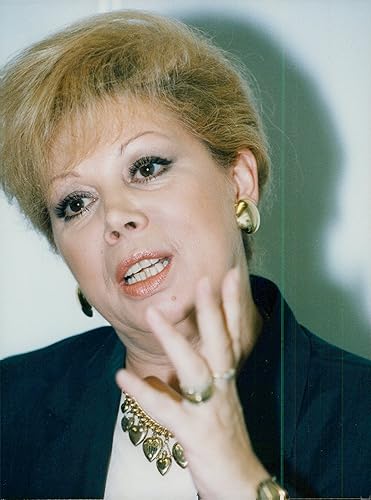
muitas horas de prazer a ouvir esta cantora. ademais era uma pessoa encantadora.
aqui a cantar a parte da Elvira da ópera Ernani, com Domingo e Nicolai Ghiaurov, este baixo extraordinário, com quem era casada.
Subscribe to:
Comments (Atom)